

Discover the Magical Wonders of Fairy Tales
Table of Contents
Introduction:
Do you remember stories that took you to magical places where dreams came true? Fairy tales have been a favorite for many, telling tales that spark our imagination and show us deep truths about ourselves. These stories are more than just fun for kids—they open doors to courage, change, and hope for all of us.
Fairy tales have been loved for ages, from old stories passed down to new versions today. They tell of brave heroes and everyday people facing big challenges. These magical stories take us on a journey to discover our own potential.
These tales have lasted for thousands of years, with some like “Beauty and the Beast” being over 4,000 years old. They cross cultures, showing us common values and dreams through magical stories. These stories inspire and teach us, even today.
Key Takeaways
- Fairy tales connect generations through magical storytelling
- Stories reveal universal human experiences and emotions
- Narratives have evolved from oral traditions to diverse media formats
- Magical elements symbolize deeper psychological transformations
- Fairy tales communicate complex moral lessons through engaging narratives
What Makes a Fairy Tale Magical: Understanding the Genre
Fairy tales take us to places where dreams come true. They have captivated people for ages. These stories mix folklore, myth, and legend in amazing ways.
The magic of fairy tales is in their mix of wonder and lessons. They entertain and teach us at the same time. This shows how storytelling has lasted for centuries.
Elements of Wonder Tales
Wonder tales spark our imagination with magical things. They often include:
- Magical transformations
- Supernatural beings like fairies and wizards
- Impossible events that defy natural laws
- Enchanted objects with extraordinary powers
Components of Moral Tales
Moral tales teach us important lessons. They do this through stories that are both fun and meaningful:
- Clear distinctions between good and evil
- Consequences of character choices
- Rewards for virtuous behavior
- Punishments for negative actions
Traditional Storytelling Methods
Storytellers keep fairy tales alive with special techniques. These methods grab our attention:
- Oral transmission across generations
- Symbolic character representations
- Repetitive narrative structures
- Universal themes that transcend cultural boundaries
By understanding these magical parts, you’ll see the artistry in every fairy tale.
The Ancient Origins and Evolution of Fairy Tales

Explore the enchanting realm of fairy tales, where stories have traveled through thousands of years. These magical tales are much older than you might think, with roots dating back to prehistoric times.
The origins of fables and fairy tales are truly remarkable. Researchers have found that some beloved stories are incredibly old:
- Jack and the Beanstalk dates back over 5,000 years
- Beauty and the Beast is approximately 4,000 years old
- The Smith and the Devil tale reaches back 6,000 years to the Bronze Age
Scholars used new methods, similar to those in biology, to track these stories’ journeys. These methods showed that many fairy tales were around long before we wrote them down. They were passed down through stories told by mouth.
| Fairy Tale | Estimated Age | Cultural Significance |
|---|---|---|
| Jack and the Beanstalk | 5,000+ years | Indo-European language roots |
| Beauty and the Beast | 4,000 years | Widespread cultural adaptation |
| The Smith and the Devil | 6,000 years | Bronze Age storytelling |
The Brothers Grimm were key in saving these stories. In 1815, they published “Children’s and Household Tales” with 86 fairy tales. By 1857, they had over 210 stories, showing the depth of cultural storytelling.
These ancient tales were more than just fun. They carried cultural knowledge, moral lessons, and shared experiences from one generation to the next.
The Educational Power of Fairy Tales in Child Development
Fairy tales are more than just bedtime stories. They are powerful tools for learning. They help your child grow in many ways.
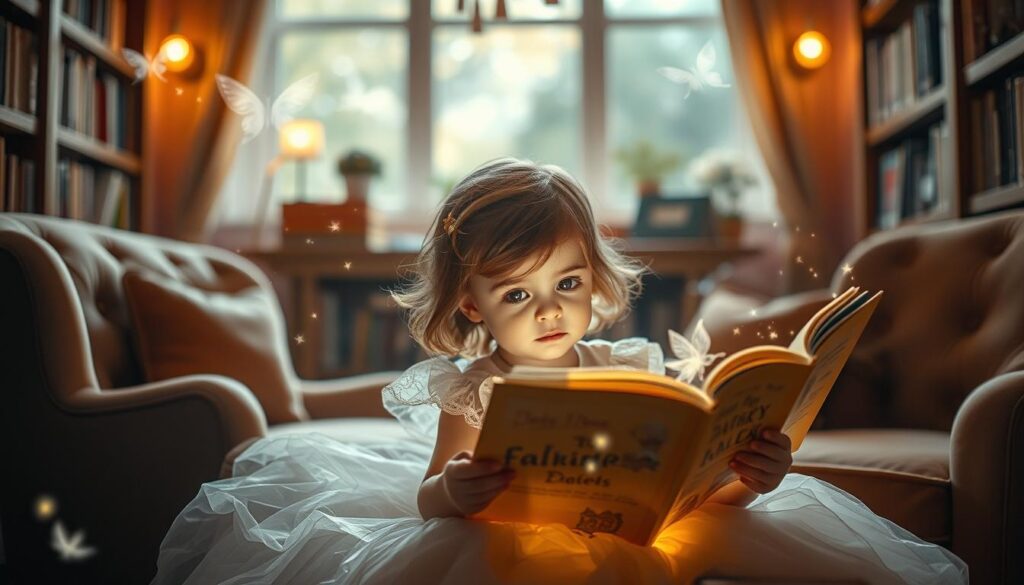
Fairy tales are a great way for kids to learn and grow. They have a big impact on child development. This includes many important areas of growth.
Building Language and Communication Skills
Listening to fairy tales helps kids learn new words and understand language better. Studies show that:
- Children learn new words from these stories
- Repetition in storytelling helps with memory
- Story structures improve communication skills
Fostering Emotional Intelligence
These magical stories are a safe place for kids to explore their feelings. They help kids:
- Identify and understand complex emotions
- See different emotional experiences
- Learn empathy by seeing things from others’ viewpoints
Developing Critical Thinking Abilities
Fairy tales challenge kids to solve problems and learn lessons. They improve critical thinking skills. Here’s how:
| Skill Developed | Percentage Improvement |
|---|---|
| Critical Thinking | 78% |
| Reading Comprehension | 40% |
| Moral Understanding | 90% |
Fairy tales make learning an exciting adventure for kids. They turn education into a fun journey of discovery.
Most Beloved Classic Fairy Tales Through Time
Step into the magical world of classic fairy tales. These stories have won the hearts of many for generations. They bring wonder and imagination to both kids and adults. They show us the magic of talking animals and magical changes.
Let’s look at some of the most loved fairy tales that have lasted:
- Cinderella: A magical story of change and hope, with about 1,500 versions worldwide
- Snow White: A tale that has been loved for over two centuries
- The Three Little Pigs: A story about being brave and planning well
- Little Red Riding Hood: A classic tale about courage and being careful
- The Princess and the Pea: A whimsical story about true nobility
These fairy tales are more than just stories. They help kids grow by teaching them about feelings and right and wrong. For example, “Pinocchio” teaches kids about telling the truth. “Beauty and the Beast” shows the value of true friendship.
Many fairy tales are made for different ages. Stories like “Sleeping Beauty” and “The Little Mermaid” are for kids aged 3-7. They have themes and stories that are fun and right for their age.
Every fairy tale is a magical journey that transforms ordinary moments into extraordinary adventures.
The Role of Fantasy and Folklore in Modern Society
Fantasy and folklore are still a big part of our culture today. They change how we see stories and values. These old tales have grown with us, keeping their emotional power.
Today, we see fantasy and folklore everywhere. They’re in books, movies, and more. These stories help us understand ourselves and the world.
Cultural Significance and Social Values
Fairy tales show us what society expects and values. They tell us important stories that everyone can relate to. These tales are mirrors of our culture.
- Reflect changing social norms
- Communicate universal human experiences
- Provide moral guidance
- Challenge existing cultural perspectives
Contemporary Adaptations and Interpretations
Today’s storytellers are making old tales new again. Harry Potter and The Chronicles of Narnia show how fantasy can fit into today’s stories.
| Original Tale | Modern Adaptation | Key Transformation |
|---|---|---|
| Cinderella | Disney Live-Action Film | Empowered female protagonist |
| Snow White | Snow White and the Huntsman | Action-oriented narrative |
Impact on Popular Media
Fantasy and folklore have shaped many movies, TV shows, and books. They touch on deep human feelings and experiences. This is why they’re so loved.
As J.R.R. Tolkien noted, fairy tales offer both children and adults a powerful form of escapism and understanding.
These stories keep our imagination alive. They show that the magic of storytelling never fades.
Essential Elements That Define a Fairy Tale
Fairy tales are magical stories that capture our imagination. They are more than just fun, blending myth and legend into their tales. These stories have key elements that make them unforgettable.
The core parts of a fairy tale include:
- A clear struggle between good and evil
- Magical or supernatural elements
- Ordinary protagonists facing extraordinary challenges
- Moral lessons embedded within the story
- Symbolic representations of human experiences
Fairy tales use special techniques to stay in our minds. Numbers like 3 and 7 are common, seen in The Three Little Pigs and The Seven Dwarfs. These numbers add rhythm and make the stories easy to remember.
The characters in fairy tales are like archetypes, found in many cultures. Heroes face big challenges, villains show bad traits, and magical helpers aid in crucial moments. These characters show us universal human experiences, making the stories timeless.
Most fairy tales end on a hopeful note, showing good wins over bad. Stories like Cinderella’s or a clever hero outsmarting a villain teach us that kindness and hard work can conquer all.
How Fairy Tales Shape Children’s Imagination
Fairy tales open up a world of imagination for kids. They take young minds to places where anything is possible. Studies show that 75% of people still connect with characters from their childhood stories. This shows how deeply stories can impact us.
Fairy tales are more than just fun. They help kids grow in many ways. They introduce kids to worlds beyond their everyday lives.
Creative Development Through Storytelling
Reading fairy tales boosts kids’ creativity. Kids who read these stories play more imaginatively, by up to 60%. These stories help kids:
- See complex ideas in their mind
- Think in stories
- Look at things from different views
- Make hard ideas easy to understand
Building Problem-Solving Skills
Fairy tales show characters solving big problems. About 65% of kids who hear moral stories make better choices. These stories teach kids to be creative and solve problems.
Enhancing Social Understanding
Fairy tales also help kids understand people better. Kids who hear these stories feel more empathy, by 50%. They learn to see different feelings and how people interact.
“Imagination is more important than knowledge.” – Albert Einstein
Fairy tales help kids deal with life’s challenges. They prepare young minds to face the world with creativity and feeling.
The Universal Themes in Fairy Tale Narratives
Fairy tales have been loved for many years. They turn simple bedtime stories into amazing adventures. These stories are not just fun; they dive into what it means to be human.
At their core, fairy tales teach us about feelings and right and wrong. Studies show that about 90% of children’s books teach lessons from classic tales. These lessons focus on being kind and brave.
- Triumph of good over evil
- Power of love and compassion
- Importance of perseverance
- Transformation and personal growth
These themes are common across cultures. They connect people through shared experiences. Characters like heroes and villains are key, found in about 80% of stories. They help kids understand feelings and how to interact with others.
Digital stories have made fairy tales even more popular. Interactive apps have boosted interest by 85%. This shows how fairy tales continue to inspire and teach us, connecting us through their stories.
Conclusion: The Timeless Appeal of Fairy Tales
Fairy tales have become a big part of our culture, reaching across time and places. They have deeply influenced storytelling, learning, and personal growth. With over fifteen thousand European stories, they share universal themes that enchant and teach us.
These magical stories shape our imagination and emotional smarts. They are not just for kids; they carry deep lessons and human experiences. Characters and symbols offer insights that touch people of all ages.
The magic of fairy tales is in their power to change, teach, and inspire us. They connect us through tales of animals, magic, and great adventures. By loving fairy tales, we keep their stories alive for future generations.
See fairy tales as living, evolving art that helps us understand ourselves. They guide us in feeling, empathy, and exploring our potential. Our bond with these stories shows their lasting appeal and importance.
FAQ
What exactly are fairy tales?
Fairy tales are stories filled with magic and lessons. They have been shared for generations. These tales often have fantastical elements that teach us about life.
Are fairy tales only for children?
No, fairy tales are for everyone. They have deep themes and insights that adults enjoy too. These stories are full of symbolism and complex ideas.
How do fairy tales impact child development?
Fairy tales help kids with language, emotions, and thinking. They let children deal with feelings safely. They also teach problem-solving and social skills through stories.
Where do fairy tales come from?
Fairy tales started as oral stories in many cultures. They were shared through generations. Over time, they were written down and changed.
What makes a story a true fairy tale?
True fairy tales have magic, archetypes, and lessons. They follow a journey where heroes face challenges. These stories show good vs. evil clearly.
How have fairy tales changed over time?
Fairy tales have evolved with culture and society. Modern versions update old stories. They keep the core themes but reflect new views.
Why are fairy tales still relevant today?
Fairy tales are still important because they deal with universal themes. They teach morals, inspire, and offer wisdom. Their ability to change keeps them relevant.
Can fairy tales teach important life lessons?
Yes! Fairy tales teach valuable lessons through stories. They teach about courage, kindness, and making good choices.
How do different cultures interpret fairy tales?
Cultures see fairy tales through their own eyes. They add their own stories and values. This makes each tale unique.
Are modern fairy tale adaptations faithful to original stories?
Modern tales keep the core themes but change details. They update characters and roles. They aim to keep the magic and spirit of the originals.